The founder
Every piece of legal work Chris Dias has sent into the world for twenty-five years has carried his name. That is the deal: do the work, sign it, and if it is wrong, answer for it. NativeLaw exists because artificial intelligence does not change that deal. It raises the stakes on it.
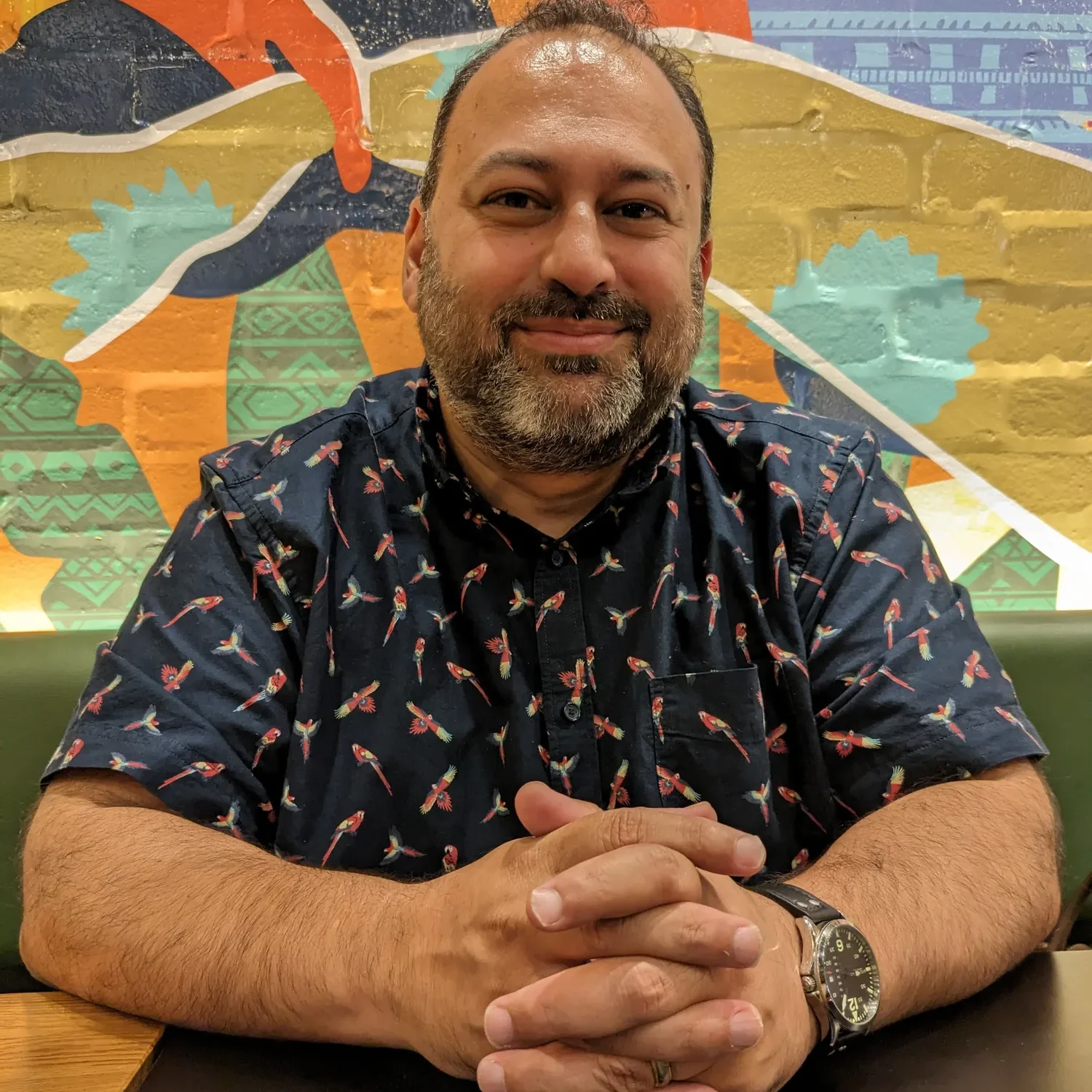
Chris qualified as a solicitor in 2001, of Anglo-Indian heritage and born in London, and spent two decades building an immigration practice: sponsor licences, work visas, the machinery by which people and businesses cross borders. Immigration law is a good teacher for what is coming to the rest of the profession, because it is high-volume, document-heavy, procedurally rigid and unforgiving of error. A misread rule does not cost a client money; it costs them their life in a country. You learn, in that practice, exactly what a signature is worth.
In 2022 Chris and his wife Crystal, both solicitors, built Lawyery, a regulated law firm in Holborn designed to be virtual-first from its foundations: self-booking, remote by default, digital from intake to invoice. Lawyery taught the first half of the lesson: what it actually takes to run modern delivery inside a regulator's perimeter, with real clients, real files, and a compliance officer whose name is on the line. It is one thing to theorise about legal innovation; it is another to operate it under the SRA's gaze. Today Lawyery runs on Brief, Opinion and Control, and is NativeLaw's partner for the full vertical: the regulated firm on the infrastructure. Lawyery holds the Certified AI-Hybrid mark, and by choice: a specialist immigration boutique sells the judgement of named experts, so AI is used at the solicitor's discretion where it earns its place, never by compulsion, with a solicitor signing every AI-assisted output before it reaches a client. That is a settled position, not a step on the way to something fuller.
The second half of the lesson came from building the technology. Through Legalaid, a company founded to make AI tools for immigration practitioners, Chris built and shipped working systems for visa assessments, sponsor licences and settlement applications, on a conviction he has written about often: that AI in law should be a grassroots movement led by the people who carry professional responsibility, not handed down by corporate giants. The tools taught what the machines could do. The firm had taught what the regulator requires. The space between those two lessons is where the real product turned out to live.
What stops an ordinary firm operating like the new AI firms is not technology; any firm can licence world-class legal AI tomorrow. What no firm can buy is a defensible answer to the regulator's question: who supervised this machine's work, how, and can you prove it? So Chris built the supervision. Countersigned is a five-layer process that takes AI-generated legal work through structured, recorded, professionally-owned review, ending in a sealed, tamper-evident audit record and a named lawyer's signature. The name says the whole idea: in law, a countersignature is the second signature that makes a document effective. The machine drafts; the lawyer countersigns; the record proves it.
Before the infrastructure came the idea, set out in public where an idea belongs. Professed is the manifesto and thesis for AI-native, professed law: the case for embracing AI where it saves time and money, while upholding the public, binding declaration that marks the line the machine should never cross. It is kept deliberately separate from the ventures so it can travel further than any of them. Everything on this site is that argument, built.
If the only thing standing between an ordinary practice and AI-native operation is a defensible supervision layer, and the supervision layer exists, then what has actually been built is the conversion mechanism. NativeLaw is that conclusion made explicit: the compliance infrastructure that allows any regulated law firm, and any legal department, to operate AI-native. The machine drafts; a named lawyer professes; the record proves it; the practice transforms without ceasing to be itself.
The question is no longer how to build one AI-Hybrid firm. He already has one. It is how to give every firm the infrastructure to become one.
NativeLaw is coming soon, and the conversations are with Chris directly, for now. Firms, legal departments and the simply curious are all welcome.
Get in touch